
The 30-60-90 Day Plan: The Proven, Powerful Way to Start Any New Role Right
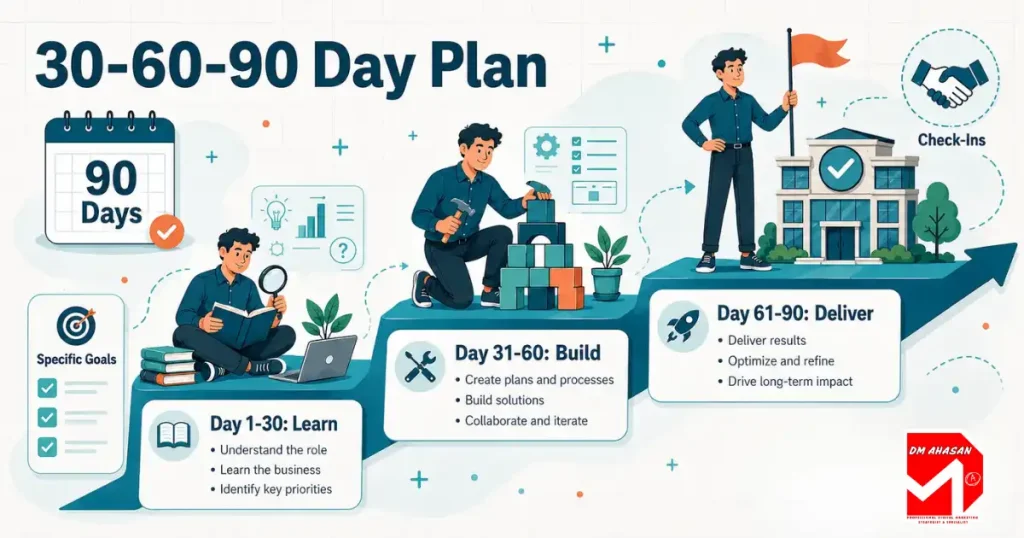
A 30-60-90 day plan is a simple roadmap that breaks your first three months in a new role, or a new business phase, into three clear stages, learning, building, and delivering results. I’ve used this structure both for myself starting new projects and for helping people prepare for interviews, and it works for one honest reason. It forces you to think in stages instead of trying to prove everything on day one.
This guide walks through what belongs in each 30-day stage, a real example you can adapt, and why this same structure works whether you’re starting a new job, launching a new department, or even kicking off a big new project inside your own business.
The 30-60-90 Day Plan: What Goes in Each Stage
Days 1-30: Learn. This stage is entirely about absorbing information, not proving yourself yet. Learn the systems, meet the key people, understand what’s already working and what isn’t, and figure out where the real problems are before you start proposing solutions. Trying to fix things you don’t fully understand yet is the fastest way to lose trust early.
Days 31-60: Build. Now you start contributing, but in smaller, lower-risk ways. Take on your first real project, propose a specific improvement based on what you learned in the first month, and start building the relationships that will matter for bigger work later. This stage is about proving you learned the right things, not about delivering something massive yet.
Days 61-90: Deliver. By now you should have enough context and trust to take on real ownership. Deliver a complete project, show a measurable result, and start setting the direction for what comes next. This is where the first two stages pay off, you’re not guessing anymore, you’re executing with real information behind you.
A Real Example: Starting as a Marketing Manager
Let’s make this concrete instead of abstract. Say you just started as a marketing manager at a mid-size company.
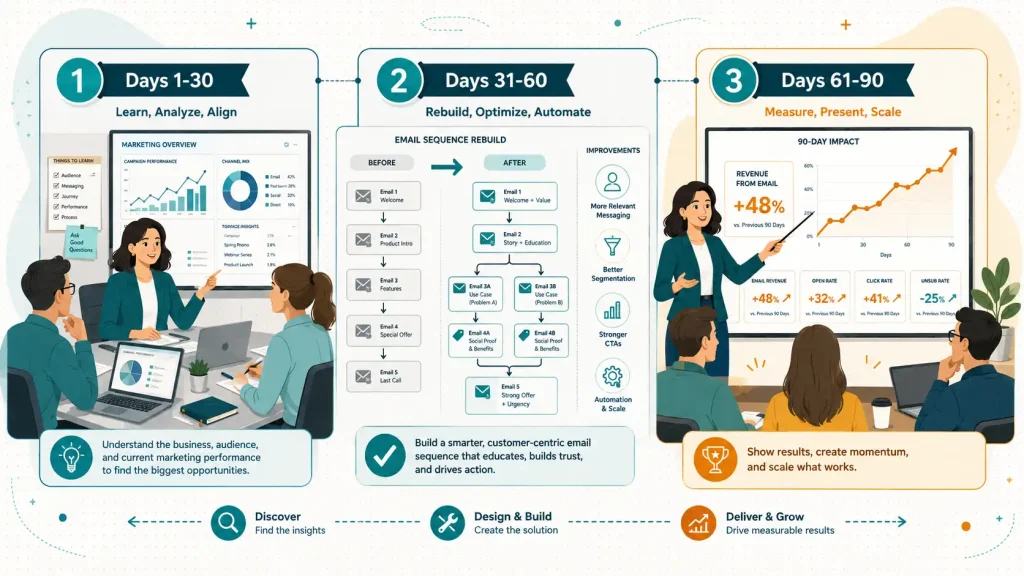
Days 1-30: Sit in on every team meeting, review the last year of campaign performance data, meet with sales to understand what leads actually convert, and identify the two or three biggest gaps in the current marketing approach.
Days 31-60: Pick one of those gaps, say, weak email nurture sequences, and rebuild that one specific piece. Present early results to your manager. Start building a working relationship with the sales team based on real, useful data you’ve shared with them.
Days 61-90: Show the measurable improvement from your email rebuild, then present a broader strategy for the next two quarters based on everything you’ve learned. This is the moment where you shift from “the new person still learning” to “the person now setting direction.”
Why This Structure Works So Well
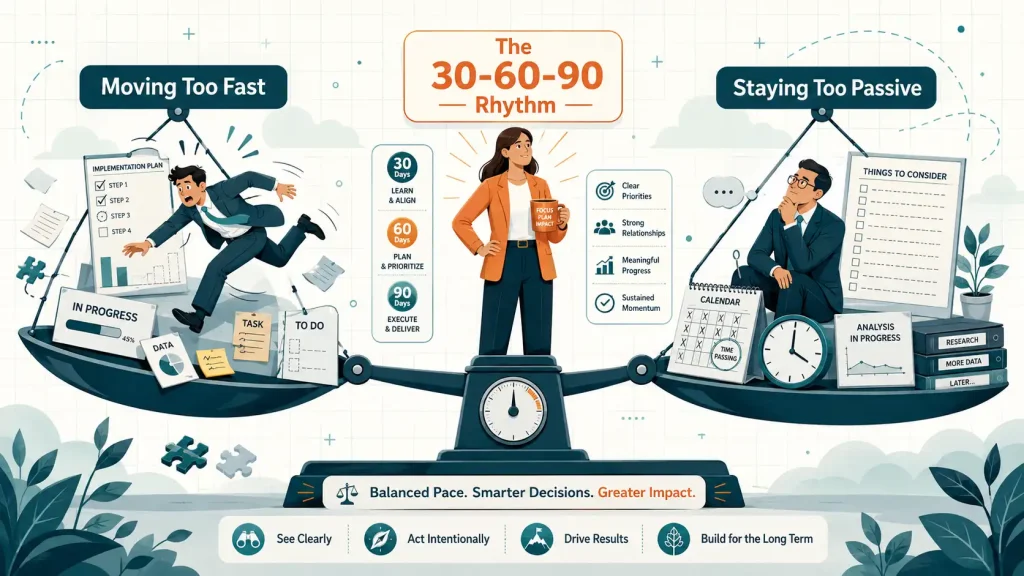
The real power of a 30-60-90 day plan isn’t the specific tasks inside it, it’s the pacing. Most people either try to prove themselves too fast, proposing big changes before they understand why things work the way they currently do, or they stay too passive for too long, still “just observing” well past the point where they should be contributing.
This structure forces a healthy rhythm. Learn first, genuinely. Then contribute in a smaller, provable way. Then deliver something real once you have the context to do it well. It also gives whoever you’re reporting to, a manager, a client, an investor, a clear way to measure your progress at each checkpoint instead of just waiting anxiously to see how things turn out.
How to Actually Write Your Own Plan
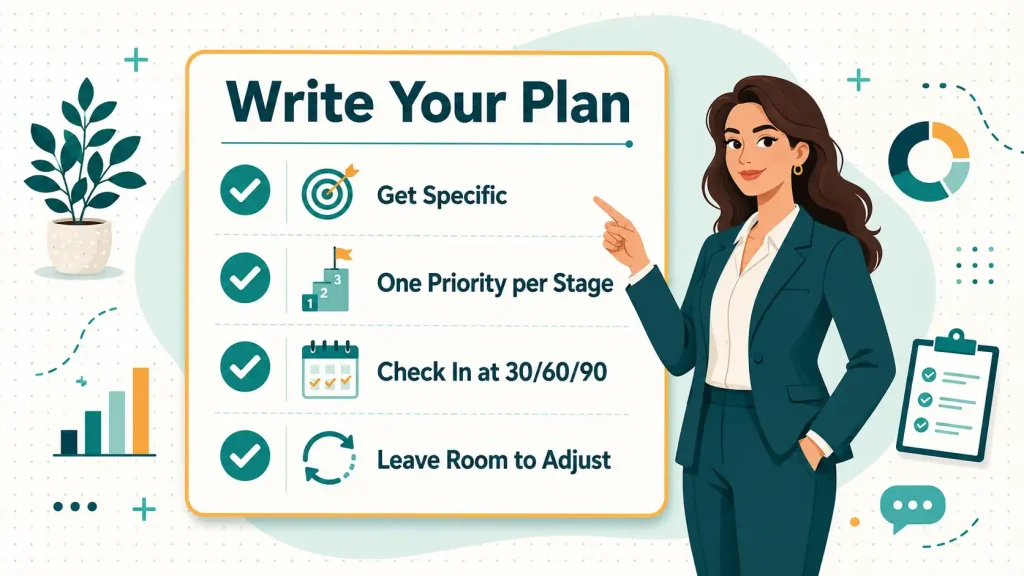
1. Get specific, not vague. “Learn the systems” is vague. “Complete onboarding training and shadow three team members” is specific and checkable. Specific goals are what make this plan actually useful instead of just a nice-looking document.
2. Set one clear priority per stage. Trying to accomplish five major things in each 30-day window usually means accomplishing none of them well. Pick the one thing that matters most for that stage, and make real progress on it.
3. Build in a check-in at each 30-day mark. A short conversation with your manager or client at day 30 and day 60 keeps everyone aligned and lets you adjust the plan if something you learned changes your priorities.
4. Leave room to adjust. A 30-60-90 day plan is a direction, not a rigid contract. If you learn something in week two that changes your whole approach, that’s the plan working correctly, not the plan failing.
The Bottom Line
A 30-60-90 day plan works because it respects the reality of starting something new, you genuinely don’t know enough on day one to deliver your best work, and pretending otherwise usually backfires. Learn first, build in a small provable way second, then deliver real results once you’ve earned the context to do it properly. Whether you’re starting a new job, launching a new part of your business, or preparing for an interview where they’ll ask you exactly this question, this same simple structure holds up.
If you’re preparing for a new role or building out your own business plan and want help thinking through the strategy behind it, that’s exactly the kind of work I help people and businesses with. Let’s map out your first 90 days together.
Frequently Asked Questions
What is a 30-60-90 day plan?
It’s a roadmap breaking your first three months in a new role or project into three stages: the first 30 days for learning, the next 30 for building and contributing in smaller ways, and the final 30 for delivering real, measurable results.
Is a 30-60-90 day plan only for job interviews?
No, though it’s very commonly used there. The same structure works for starting a new business initiative, launching a new department, or taking on any significant new project where you need time to understand context before delivering results.
What should I focus on in my first 30 days at a new job?
Focus entirely on learning, understanding the systems, meeting key people, reviewing what’s already working, and identifying real problems, rather than trying to propose big changes before you fully understand the current situation.
How specific should a 30-60-90 day plan be?
Very specific. Vague goals like “learn the systems” aren’t useful for tracking progress. Specific, checkable goals like “complete onboarding and shadow three team members” make the plan something you can actually measure yourself against.
Can I change my 30-60-90 day plan after I start?
Yes, and you often should. The plan is a direction, not a fixed contract. If something you learn in the first few weeks changes your priorities, adjusting the plan is a sign it’s working correctly, not a sign of failure.
How do I present a 30-60-90 day plan in a job interview?
Keep it structured around the same three stages, learning, building, delivering, but tailor the specifics to the actual role and company you’re interviewing for. Showing you understand the pacing (not rushing to promise big results on day one) often impresses interviewers more than an overly ambitious plan does.
Pair this plan with a one-page business plan to keep your first 90 days anchored to a clear strategy.
Further reading and data sources: www.score.org www.mckinsey.com