
SEO vs GEO: How to Get Found by Google — and ChatGPT — in 2026
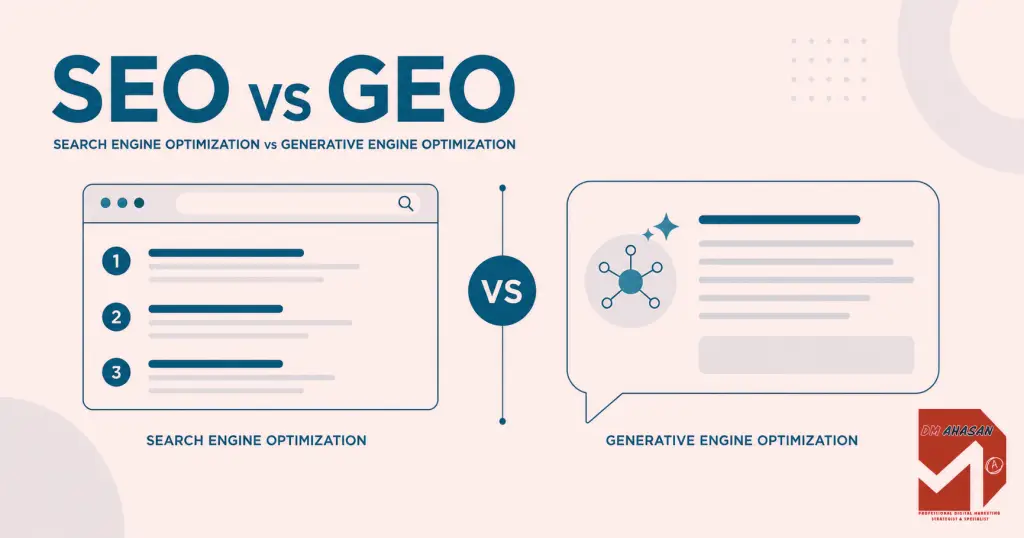
SEO vs GEO is the debate now defining search visibility in 2026. For twenty years, “getting found online” meant one thing: rank on Google. In 2026, that’s only half the job.
Your buyers are no longer just typing a question into a search box and clicking through ten blue links. Increasingly, they’re asking ChatGPT, Perplexity, or Google’s own AI Overviews a question — and getting a synthesized answer back, with maybe one or two source links, if any. If your content isn’t the one being pulled into that answer, you don’t just rank lower. You disappear from the conversation entirely.
This is the gap between SEO and GEO — Generative Engine Optimization — and in 2026, you need both working together, not one instead of the other.
What Is GEO, Exactly?
Search Engine Optimization is built around ranking in a list of links, and earning the click. Generative Engine Optimization is built around being the source an AI model chooses to cite, summarize, or fold into its answer — often without sending the reader to your site at all.
The buyer doesn’t visit your page to decide if you’re credible. The AI model has already made that judgment on their behalf, based on how clearly your content states what you do, who it’s for, and how it stacks up against the alternatives. That’s a different game than ranking for a keyword, and it rewards different habits.
Is GEO Just SEO With a New Name?
Partly, yes — and it’s worth saying plainly. Google’s own search documentation states that, from its perspective, work described as AEO or GEO is still optimization for the search experience, which is still SEO. The underlying fundamentals — quality content, real expertise, a technically sound site — haven’t changed.
What has changed is the surface buyers use to ask questions, and how answers get assembled. That’s why treating GEO as a rebrand of SEO, rather than a reason to ignore it, is the more accurate way to think about it.
SEO vs GEO at a Glance
| Traditional SEO | GEO (Generative Engine Optimization) | |
| Goal | Rank in the top 10 links | Get cited or summarized inside an AI answer |
| Signal | Backlinks, keyword density, page speed | Clarity, structure, entity consistency, third-party mentions |
| Content format | Long-form articles, keyword clusters | Direct answers, comparison tables, defined terms |
| Success metric | Rankings, organic traffic | Share of AI answers, brand mentions across the web |
| Time horizon | Compounds over months to years | Can shift with one well-structured page |
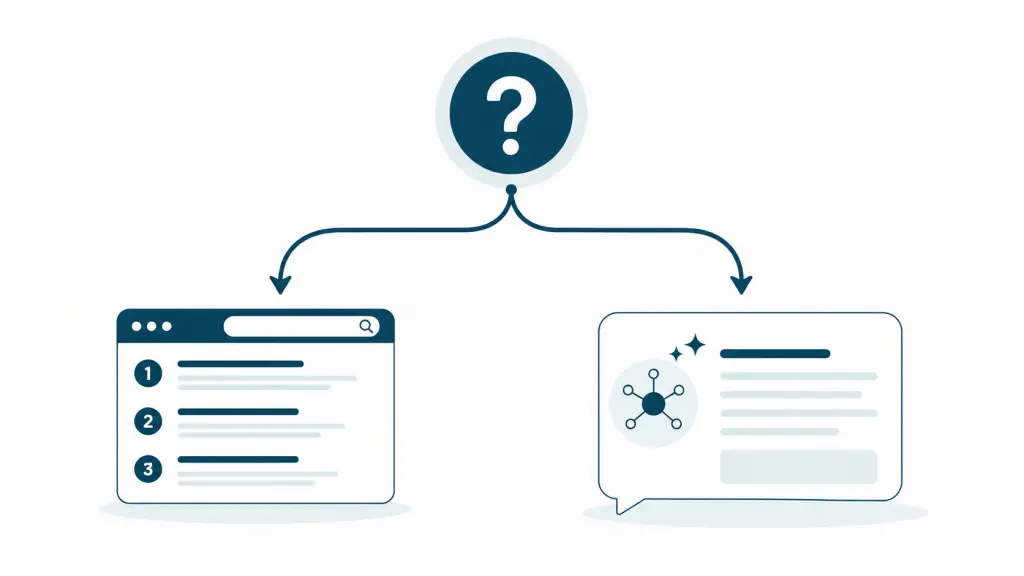
Neither approach replaces the other. Google Search still carries the overwhelming majority of global search volume, and that isn’t changing in 2026. But AI-driven answers are capturing a growing share of the research phase of the buyer journey — especially for B2B and considered purchases — which means brands winning both channels are quietly pulling ahead of those optimizing for only one.
Why This Shift Matters for Your Business
The scale of this shift is hard to ignore. Industry tracking suggests Google’s AI Overviews were appearing on roughly 16% of searches by late 2025 — more than double where they stood at the start of that year. Separately, several independent studies tracking AI citations have found that the overlap between traditional top-10 Google rankings and the sources AI tools actually cite has been shrinking, with some estimates now well below half.
In plain terms: ranking on page one of Google no longer guarantees a place in the AI-generated answer sitting above those results — and increasingly, a page doesn’t need a top-10 ranking to be the one an AI model cites.
If you sell to businesses — as an agency, a SaaS platform, or an e-commerce brand — your buyers are doing more independent research before they ever talk to you than they did even eighteen months ago. A growing share of that research now runs through an AI assistant, not a search results page. If those tools can’t find clear, well-structured information about what you do, they’ll cite a competitor instead — sometimes one with a weaker offer, simply because their content was easier for the model to read and trust.
The businesses treating this as a passing trend are the ones who’ll spend 2027 wondering why their organic traffic held steady while their inbound leads quietly dried up.
A Quick Example
Imagine two e-commerce brands selling similar imported electronics. Brand A has a page titled “About Our Warranty” written as three narrative paragraphs. Brand B has a page titled “Warranty Policy: What’s Covered, For How Long, and How to Claim It” — opening with a two-line direct answer, followed by a short table. When a buyer asks an AI assistant “which of these brands offers a better warranty,” Brand B’s page is far easier for the model to parse, extract, and cite correctly. Same information. Very different visibility.
6 Practical Steps to Win at Both
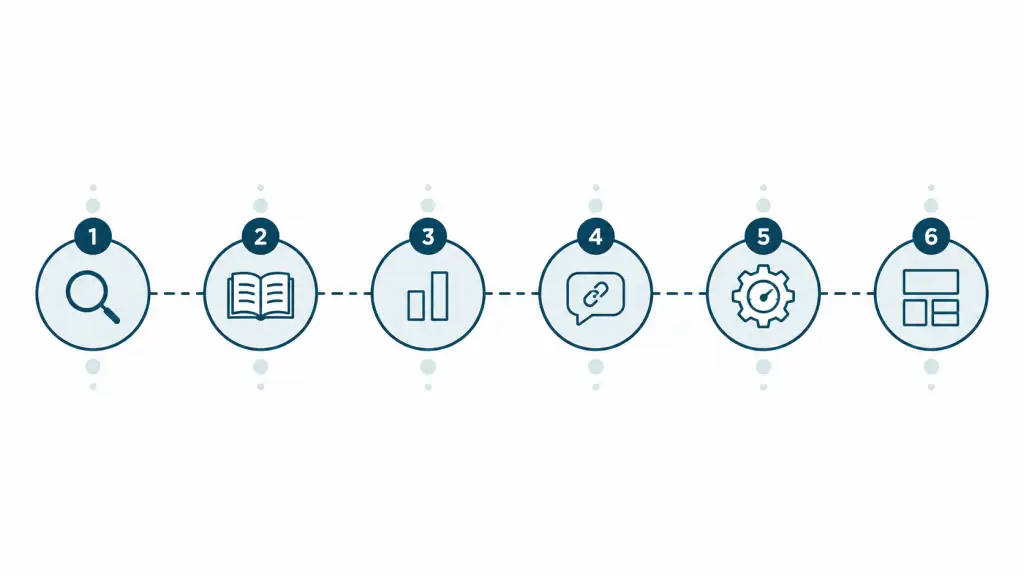
1. Write direct answers before you write narrative. Open each section with a clear, one- or two-line answer to the implied question, then expand underneath. AI models extract the clearest statement on the page — give them one worth extracting.
2. Define your terms explicitly. If you mention “ROAS” or “CAC,” define it in plain language the first time it appears. This helps new readers and gives AI models the unambiguous context they need to cite you correctly.
3. Build comparison and “versus” content. Comparison pages and side-by-side tables are pulling disproportionate weight in 2026 — they answer the exact question buyers are asking AI tools, and they’re easy for models to extract structured facts from.
4. Earn mentions on other credible sites, not just backlinks. GEO cares less about link equity and more about whether your brand is mentioned consistently across the web — in reviews, guest posts, interviews, and directories. AI models weigh authority signals from beyond your own domain.
5. Keep your technical SEO fundamentals sharp — and extend them to AI crawlers. Site speed, clean structure, mobile responsiveness, and indexability still matter. Increasingly, so does checking that your robots.txt file isn’t quietly blocking known AI crawlers (GPTBot, PerplexityBot, ClaudeBot, and similar), and that your key content isn’t hidden behind JavaScript rendering or logins only Googlebot can see through.
6. Structure content for both humans and machines. Use real headings, short paragraphs, tables, and bullet lists. Avoid burying the useful information inside dense narrative blocks. This is simply good writing — GEO just makes it non-negotiable.
Common Mistakes Brands Make
- Chasing keyword volume instead of clarity — a page stuffed with keywords but light on direct answers ranks worse in both SEO and GEO than a shorter, clearer one.
- Treating GEO as a one-time checklist instead of an ongoing content habit. One optimized page rarely moves the needle; consistency across the whole site does.
- Ignoring off-site mentions. If your brand only exists on your own website, AI models have nothing else to cross-reference your credibility against.
- Publishing generic, AI-written filler content. Models are increasingly good at recognizing — and deprioritizing — interchangeable content. Original insight, backed by real experience, still wins.
- Blocking AI crawlers by accident. A robots.txt file written for the pre-AI web can quietly shut out GPTBot, PerplexityBot, or similar crawlers without anyone noticing — worth auditing alongside your regular technical SEO checks.
Quick Action Checklist
- Audit your top 10 pages — does each open with a direct, extractable answer?
- Add a comparison table to at least one high-intent page this month.
- List every term or acronym you use that isn’t defined in plain language.
- Identify three credible third-party sites where you could earn a mention this quarter.
- Run a basic technical SEO audit — speed, mobile experience, crawlability.
- Confirm your robots.txt file isn’t blocking major AI crawlers (GPTBot, PerplexityBot, ClaudeBot, and similar).
- Add a clear FAQ section with direct, structured answers to at least one high-intent page.
The Bottom Line
SEO and GEO aren’t competing strategies — they’re two lenses on the same goal: being the clearest, most credible answer to your buyer’s question, wherever they’re asking it. Get the fundamentals right — clear structure, honest expertise, real third-party credibility — and you’ll show up whether the buyer typed into Google or asked an AI assistant.
If you want a content and SEO system built around this shift, rather than bolted on after the fact, that’s exactly the kind of work I do with clients on SEO and organic growth. Let’s talk about where your brand stands today.
Frequently Asked Questions (FAQ)
What does GEO mean in digital marketing?
GEO stands for Generative Engine Optimization — the practice of structuring content so AI tools like ChatGPT, Perplexity, and Google’s AI Overviews can find, understand, and cite it in their answers.
Is GEO the same thing as SEO?
Not exactly, though they overlap heavily. Traditional SEO optimizes for ranking in a list of links; GEO optimizes for being the source an AI model chooses to summarize or cite. Google itself has said that, from its perspective, GEO is simply part of good SEO.
Should I stop investing in traditional SEO and focus only on GEO?
No. Google Search still accounts for the large majority of search traffic worldwide, and that isn’t changing soon. The businesses winning in 2026 are building GEO on top of solid SEO fundamentals, not replacing one with the other.
How do I check if my content is being cited by AI tools?
Ask the AI tools directly — run your target questions through ChatGPT, Perplexity, and Google’s AI Overviews, and note whether and how your brand is mentioned. Some SEO platforms now offer dedicated AI-visibility tracking as well.
How long does it take to see results from a GEO strategy?
Faster than typical SEO in some respects — a single well-structured, clearly written page can start appearing in AI answers within weeks — but consistent visibility requires ongoing content quality and off-site credibility, not a one-time fix.
What’s the difference between AEO and GEO?
They’re largely interchangeable terms describing the same shift. AEO (Answer Engine Optimization) emphasizes being the direct answer to a specific question; GEO is the broader umbrella term for optimizing visibility across AI-generated responses. Most practitioners use them synonymously.