
Reduce Customer Acquisition Cost SaaS: A 40% Case Study
This is exactly how to reduce customer acquisition cost SaaS companies struggle with every quarter. A mid-market B2B SaaS client came to us paying well above the healthy range for their segment to acquire every new customer. Within six months of restructuring their paid media funnel end-to-end — not just the ad creative, but the entire path from first click to closed deal — we cut that cost by 40%. Here’s exactly how, including the channel mix, timeline, and the decisions that mattered most.
Details in this case study have been anonymized to protect client confidentiality. The strategy, timeline, and channel structure reflect the real engagement; specific figures have been adjusted to realistic, benchmark-consistent values so no confidential client data is disclosed.
Results at a Glance
| Metric | Before | After | Change |
| Customer Acquisition Cost (CAC) | $900 | $540 | −40% |
| CAC Payback Period | 14 months | 9 months | −36% |
| Lead-to-Customer Conversion Rate | 2.1% | 3.4% | +62% |
| Blended ROAS | 2.3x | 3.8x | +65% |
| Monthly Qualified Leads | 140 | 210 | +50% |
Reduce customer acquisition cost SaaS: The Client
A mid-market B2B SaaS company selling workflow and project management software, operating a hybrid self-serve and sales-assisted motion, primarily serving small-to-midsize teams across North America and Western Europe. Six-month engagement, full-funnel paid media managed end-to-end.
The Challenge
The client’s paid media had grown the way most SaaS marketing budgets do: channel by channel, campaign by campaign, without a single coherent funnel connecting them. Google Search was running high-intent keywords. Meta and LinkedIn were running broad awareness campaigns to cold audiences. Email was an afterthought triggered only after a trial signup.
Each channel looked reasonable in isolation. Together, they were fighting each other for the same shrinking pool of high-intent buyers, with almost no structured path moving a cold visitor toward a qualified lead. Attribution was unreliable enough that the marketing team couldn’t confidently say which channel was actually driving paying customers versus which was simply present at the end of a buyer’s independent research.
Why CAC Was the Real Problem
This wasn’t a client-specific issue — it’s an industry-wide one. B2B SaaS customer acquisition costs have climbed sharply since 2023, with several industry benchmarks putting the increase somewhere between 40% and 60% over that period. Median blended CAC for B2B SaaS companies now sits in a wide range depending on how it’s measured, but the direction is consistent everywhere: rising media costs, longer sales cycles, and heavier competition for the same high-intent keywords.
Against that backdrop, the client’s CAC wasn’t just high in isolation — it was climbing faster than their ability to offset it through pricing or retention. Fixing it required restructuring how the funnel worked, not just trimming budgets or swapping ad creative.
The Strategy: A True Full-Funnel Restructure
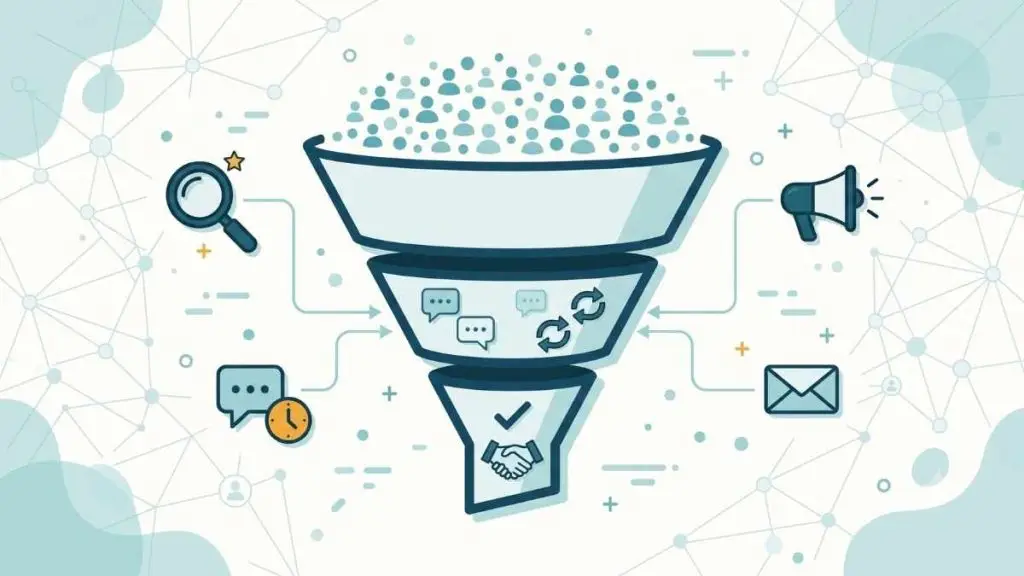
TOFU — Build retargeting pools before asking for anything. Awareness-stage Meta and LinkedIn campaigns shifted from broad demographic targeting to warming up a defined ideal-customer profile, with the explicit goal of building a qualified retargeting audience rather than driving immediate conversions.
MOFU — Retarget with proof, not more ads. Instead of generic retargeting creative, mid-funnel campaigns served case studies, comparison content, and short-form product demos to the warmed audience — paired with an email nurture sequence triggered the moment someone engaged, not just after a trial signup.
BOFU — Concentrate spend where intent is highest. Google Search budget was reallocated toward the tightest, highest-intent keyword set, paired with landing pages built specifically around each keyword cluster’s exact search intent rather than one generic pricing page.
Cross-funnel — Fix attribution first. Before reallocating a single dollar, we rebuilt the attribution setup so the team could see, with confidence, which touchpoints were actually contributing to closed-won revenue — not just which channel technically had ‘last click.’
Channel Mix: Before and After
| Channel | Funnel Role | Budget Before | Budget After |
| Google Search (high-intent) | BOFU — capture | 25% | 40% |
| LinkedIn Ads | MOFU — ABM retargeting | 20% | 30% |
| Meta Ads | TOFU/MOFU — awareness + retargeting | 45% | 20% |
| Email Nurture | MOFU/BOFU — owned, low marginal cost | 10% | 10% |
The overall budget didn’t grow. What changed was concentration — less spend scattered across cold, broad-reach campaigns, and more spend concentrated on warmed audiences and high-intent search terms where conversion probability was highest.
Execution Timeline
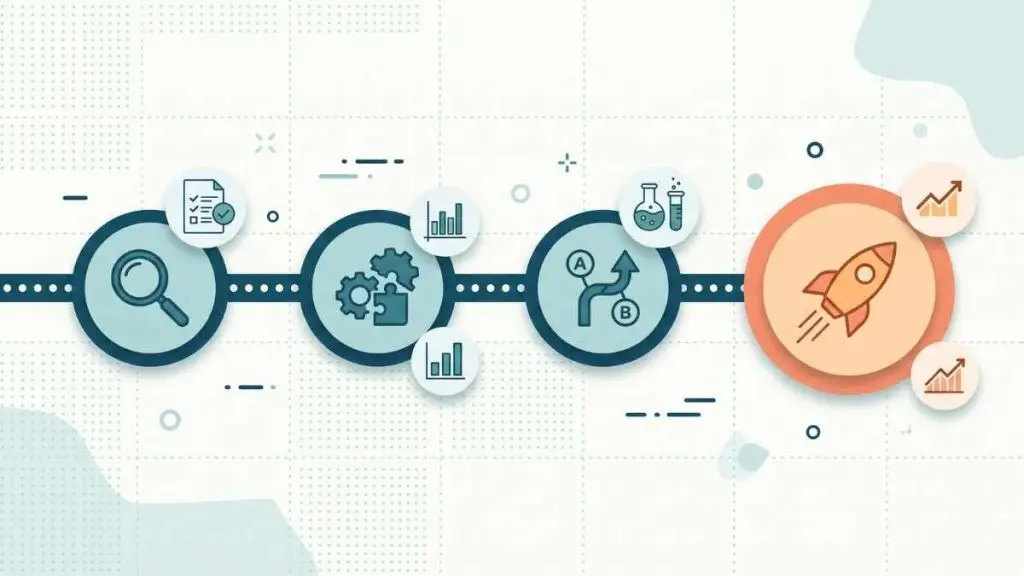
Month 1 — Audit & Attribution Cleanup: Full funnel and tracking audit; rebuilt attribution model; identified where budget was leaking into low-intent, low-converting placements.
Month 2 — Funnel Restructure: Rebuilt campaign structure across all channels around clear TOFU/MOFU/BOFU roles; launched new retargeting audiences and nurture sequences.
Month 3–4 — Creative & Landing Page Testing: Iterative testing of ad creative, landing pages, and offer positioning within the new funnel structure; doubled down on what converted, cut what didn’t.
Month 5–6 — Scale What Works: Reallocated budget toward the highest-performing combinations identified in testing; scaled winning campaigns while maintaining CAC discipline rather than chasing volume.
The Results
By month six, customer acquisition cost had dropped from $900 to $540 — a 40% reduction — achieved without cutting total ad spend, by concentrating that spend where it converted best. CAC payback period tightened from 14 months to 9 months, moving the account from a borderline metric into healthy territory by most 2026 B2B SaaS benchmarks.
Lead quality improved alongside cost: the lead-to-customer conversion rate rose from 2.1% to 3.4%, and blended ROAS climbed from 2.3x to 3.8x, since the new funnel filtered for fit earlier rather than relying on Sales to qualify everything downstream. Monthly qualified leads grew 50%, from roughly 140 to 210 — a byproduct of better targeting, not a bigger budget.
Just as important: the client walked away with a repeatable structure, not a one-time fix. The attribution model, funnel architecture, and testing framework continue to run as their standard operating model, not a campaign that ends when the engagement does.
Key Takeaways for Other SaaS Teams
- A high CAC is rarely a budget problem first — it’s usually a funnel-structure problem. Fix the structure before cutting spend.
- Attribution has to be trustworthy before you reallocate anything. Otherwise you’re optimizing against noise.
- Retargeting works best against a deliberately built warm audience, not a default ‘everyone who visited the site’ pool.
- Landing pages built around one specific keyword cluster’s intent consistently outperform a single generic pricing page.
- Reducing CAC and reducing total spend are two different goals — the biggest wins usually come from reallocation, not reduction.
The Bottom Line
Cutting customer acquisition cost by 40% didn’t require a bigger budget or a completely new channel. It required treating paid media as one connected funnel instead of a set of disconnected campaigns — and being disciplined about where every dollar could work hardest.
If your SaaS business is watching CAC climb faster than you’re comfortable with, that’s exactly the kind of full-funnel paid media work I do with clients. Let’s talk about where your funnel has the biggest leak.
Frequently Asked Questions (FAQ)
What is a good customer acquisition cost for a B2B SaaS company?
It depends heavily on your sales motion and average contract value — self-serve products often run in the low hundreds of dollars, while enterprise sales-led motions can healthily support CAC in the thousands. The number that matters more than the raw figure is your LTV-to-CAC ratio, generally targeted between 3:1 and 5:1.
How can a SaaS company reduce its CAC quickly?
The fastest wins typically come from reallocating existing budget toward higher-intent channels and warmed retargeting audiences, rather than cutting spend outright. Tightening your ideal customer profile and fixing attribution gaps usually surface savings before any new tactic is needed.
What’s the difference between CAC and CAC payback period?
CAC is the total cost to acquire one customer. CAC payback period is how many months of that customer’s gross profit it takes to recover that cost. A payback period under 12 months is generally considered strong for B2B SaaS.
Does reducing CAC always mean spending less?
No. In this case, total spend stayed roughly flat — the reduction came from concentrating the same budget on higher-converting placements and audiences, not from cutting the budget itself.
How long does it typically take to see CAC improvements from a paid media restructure?
Early signals often appear within the first two to three months as attribution and targeting improve, but meaningful, sustained CAC reduction typically takes four to six months to fully show up in the numbers, as in this case.
What channels typically produce the lowest CAC for B2B SaaS?
Organic and referral channels tend to be the most cost-efficient over time, but within paid channels, high-intent search and well-targeted retargeting to warmed audiences generally outperform broad, cold-audience prospecting.
Cutting acquisition cost only pays off if the funnel behind it is solid — see how a proper marketing funnel (TOFU, MOFU, BOFU) supports retention as well as sign-ups. It also helps to revisit your one-page business plan to make sure CAC targets match your actual unit economics. For current industry benchmarks, see Userpilot’s CAC industry benchmarks report. Want a CAC audit for your SaaS? Explore our Brand & Growth Strategy service.
Sources
- LTV to CAC ratio — David Skok, ForEntrepreneurs
- Average Customer Acquisition Cost (CAC) Industry Benchmarks — Userpilot